

As defined by Silverman and Smith in the Strategic Planning for Public Relations textbook, reputation management is a “continuing long-term process of how an organization seeks to influence the way its publics view and understand the organization” (Silverman & Smith, 2024).
The idea of reputation management seems simple, but there are many ways to carry it out. Everything said about your brand and every experience it has feed into the overall reputation, meaning management of it should be a core focus of your organization’s operations.
As TJ Kiely states in an article for Meltwater, “Reputation management has become an even greater concern in the current digital climate… bad press no longer dies with yesterday’s news” (Kiely, 2021).
The digital era that we live in makes reputation management and image restoration more important than ever before, as crises tend to be more widespread and damaging. As PR professionals, we must be prepared to help our clients maintain a positive reputation with publics through strategic communication and reputation management skills.
Brandy Melville
Brandy Melville, a retailer known for their one-size-fits-all clothing, intentionally shapes and manages their reputation through communication and product choices. This controversial sizing strategy is an aspect of their reputation management.
Although risky, the brand uses their unique sizing to target core consumers. This strategy has shown to make consumers who cannot purchase their products want to even more. Exclusivity is not only an idea for Brandy Melville, but something that is central to their reputation (VanSlette & Waymer, 2016).
The key lesson seen in the Brandy Melville case is that while exclusivity can strengthen brand identity and loyalty amongst the core audience, it also carries reputational risks that must be handled properly.
Seaworld
After a documentary was made exposing their harmful practices, SeaWorld was forced to conduct severe reputation management. They quickly lost control of the narrative when the documentary aired on national television, which made it even more difficult to rebuild stakeholder trust and manage their reputation.
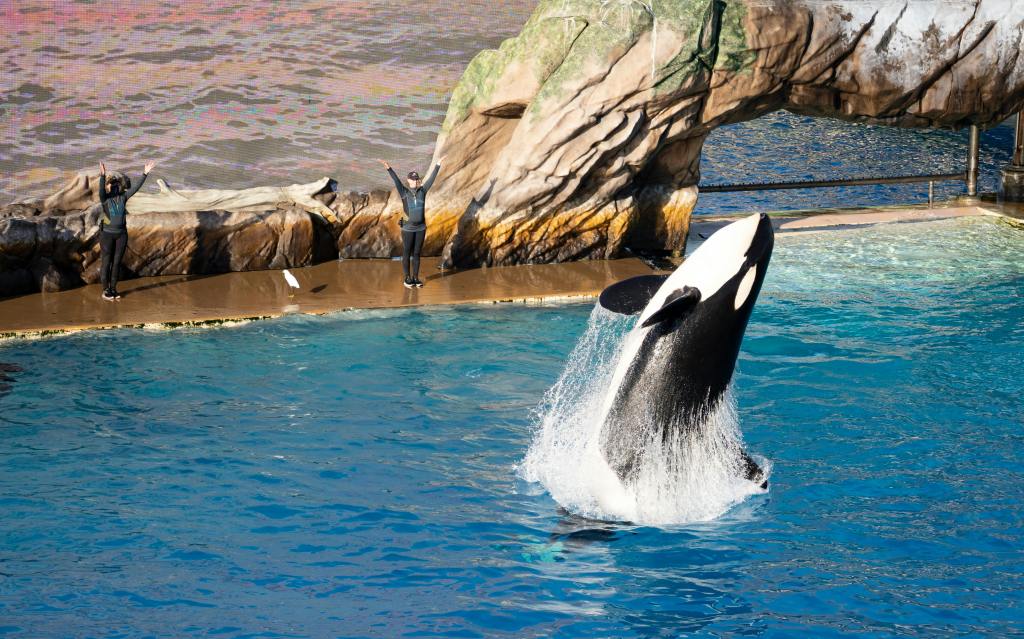
SeaWorld learned that they had to change their communication tactics to show stakeholders that they were working to repair the damage caused by the situation. Their words had to be met with action and change in order to truly mean something (Duhon, Ellison, & Ragas, 2016).
This case shows that failure to effectively mitigate and control reputational damage can be detrimental, giving reputation management an incredibly important role in crisis communication.
EXXONMobil
When ExxonMobil was caught in a debate over the use of hydraulic fracturing, they employed reputation management to persuade the public that their tactics were safe and effective.
ExxonMobil faced public opposition due to fears about water contamination and health risks caused by hydraulic fracturing. ExxonMobil responded through strategic communication and advertising to explain the safety and importance behind hydraulic fracturing (Water on Fire, 2012).

In this case, the product directly affects their reputation because many people believed it was dangerous for public health, which negatively affected ExxonMobil’s reputation.
Their strategic communication regarding hydraulic fracturing acted as a form of reputation management, since they were reassuring concerned stakeholders that their brand and product were trustworthy.
Image restoration in the nfl
In some cases, reputation management is no longer enough and you must move to image restoration.
Deflategate is one of the most well-known scandals in the sports world, where Tom Brady and the New England Patriots were accused of using under inflated footballs in the AFC Championship game (Strawser et al., 2017).
They could not merely manage their reputation in this situation. Instead, Tom Brady and the Patriots needed to employ image restoration strategies, specifically denial. The use of these tactics is to sway the public in the face of a crisis and to maintain their positive reputation.
Lessons Learned
Ultimately, managing reputations and image restoration are crucial aspects of successful public relations. Organizations must learn to balance strategic communication and branding decisions with stakeholder needs to maintain a reputation and image that positively reflect their goals.
Works Cited
Duhon, S., Ellison, K., & Ragas, M. W. (2016). A whale of a problem: A strategic communication analysis of
SeaWorld Entertainment’s multi-year Blackfish crisis. Case Studies in Strategic Communication, 5, 3-37. Available
online: http://cssc.uscannenberg.org/wp-content/uploads/2016/08/v5art2.pdf
Kiely, T. (2025, October 22). Reputation PR: Definition, strategies & examples. Meltwater. https://www.meltwater.com/en/blog/reputation-pr
Silverman, D. A., & Smith, R. D. (2024). Strategic Planning for Public Relations (7th ed.). Taylor & Francis. https://bookshelf.vitalsource.com/books/9781003849513
Strawser, M. G., Shain, S., Thompson, A., Vulich, K., & Simons, C. (2017). Deflated: The strategic impact of the
“Deflategate” scandal on the NFL and its golden boy. Case Studies in Strategic Communication, 6, 62-88. Available
online: http://cssc.uscannenberg.org/wp-content/uploads/2018/01/v6art3.pdf
VanSlette, S., & Waymer, D. (2016). Exclusive and aspirational: Teen retailer Brandy Melville uses the country
club approach to brand promotion. Case Studies in Strategic Communication, 5, 117-139. Available online:
http://cssc.uscannenberg.org/wp-content/uploads/2016/08/v5art7.pdf
Water on fire: An analysis of ExxonMobil’s communicative defense of hydraulic fracturing. (2012). Arthur W. Page Society Case Study Competition.
 Heidi Verplank
Leave a comment